Hero Synergy Labs for Elite Lineups

Turn your squad into a roaring engine of fantasy strategy game power. Decode hero synergy, elemental affinities, and faction bonuses to dominate competitive multiplayer tactics across PC and mobile.

League of Legends synergy hub Region: Hungary Platforms: PC & Mobile (Wild Rift)

Why Synergy Defines the Lineup Roar Meta

On Lineup Roar we treat your team as a single tactical organism. In League of Legends and Wild Rift, raw stats win lanes, but hero synergy wins series. Understanding how abilities, passives, elemental themes, and faction identities overlap is the fastest way to climb rankings in Hungary’s fiercely competitive queues.

Use this synergy hub as your team lineup guide to structure compositions, refine multiplayer tactics, and build repeatable, tournament‑ready playbooks.

Synergy Toolkit at a Glance

Every section below is built for fast application in real games:

  • Fundamentals of hero synergy and ability layering
  • Elemental affinities, faction bonuses, and map control
  • Meta synergy archetypes and pro‑level combos
  • Counterplay frameworks and dynamic adaptation
  • Printable and digital planning worksheets

Understanding Hero Synergy

Explore how active abilities, passives, and role identities combine into lethal competitive gameplay engines.

Core Layers of Hero Synergy

Fundamentals for every fantasy strategy game player

Hero synergy is the interaction between two or more champions that creates more value together than they provide alone. In a fantasy strategy game like League of Legends this includes:

  • Ability chaining: CC into burst damage, shielding before dives, or reposition tools that set up ultimates.
  • Passive amplification: Auras, damage marks, healing bonuses, and attack modifiers that multiply when stacked.
  • Role interlocks: Tanks that anchor space, supports that enable, and carries that convert space into objectives.
  • Macro synergy: Champions whose globals, teleports, or mobility allow synchronized cross‑map plays.

Lineup Roar breaks these pieces down into readable patterns so you can design lineups that are easy to execute even with solo‑queue teammates.

From Draft to Execution

Turning champion choices into multiplayer tactics

Elite teams in Hungary treat team building as a RPG strategy puzzle. They start from a clear win condition and draft synergy backward:

  1. Define your primary win condition – 5v5 front‑to‑back, pick comp, poke, split push, or wombo combo.
  2. Select keystone heroes – 1–2 champions whose kits define the comp (for example, Malphite for engage, Orianna for AoE control).
  3. Lock enabling pieces – peel, vision control, secondary engage, and damage profiles that fill gaps.
  4. Draft counter‑tools – disengage, cleanse, or anti‑heal to blunt enemy synergy.

Use our Interactive Synergy Planner below to walk through this process step by step before your next ranked session.

Elemental Affinities & Faction Bonuses

Leverage thematic alignments to unlock advanced tactical synergy and map‑wide pressure.

While League of Legends does not label strict "elements" the way some RPGs do, champions still fall into strong elemental and faction‑like identities—shadow, light, ice, fire, nature, arcane, and technological. Building around these themes improves both clarity and execution for your squad.

In Hungary’s competitive stacks, players use these affinity clusters as a multiplayer tactics shorthand: "We play ice control" or "We draft a fire dive comp". Lineup Roar adapts this language into practical guides.

Affinity Playstyles

  • Fire / Infernal: Explosive burst, dive, and reset champions that thrive on fast fights.
  • Ice / Frost: Hard control, kiting, and terrain‑shaping tools ideal for objective setups.
  • Shadow / Void: Picks, flanks, and backline assassins that punish poor vision.
  • Nature / Spirit: Healing, shields, and zone control for extended skirmishes.
  • Arcane / Tech: Scaling artillery, poke, and cooldown‑focused mages or marksmen.

When you stack similar affinities, your comp gains a clear identity. When you mix, you gain flexibility and counterplay. Our Meta Strategies page breaks down which approach fits current patches.

Elemental fantasy battle showing a coordinated hero team combining fire, ice, and shadow powers in a tactical arena
Elemental themes help Hungarian teams in ranked play quickly align around a shared game plan and objective setup.

Top Synergy Archetypes

Meta‑defining cores that every competitive player should recognize and practice.

Front‑to‑Back Teamfight

Tank • Enchanter • Hypercarry

The classic tank‑support‑damage lineup. A durable frontline absorbs cooldowns, an enchanter protects the backline, and a hypercarry shreds through whoever remains.

  • Ideal for structured 5v5s and objective control.
  • Scales well in coordinated Hungarian premades.
  • Requires disciplined positioning, not flashy executions.

Pick & Pick‑Again

Assassin • Catch Support • Burst Mage

Built around single‑target deletion and vision control. Ideal when your team excels at roaming and controlling jungle entrances.

  • Rewards strong map awareness and communication.
  • Can close games before late‑game front‑to‑back comps come online.
  • Pairs well with aggressive vision strategies from our Mechanics page.

Wombo Combo Arena

Hard Engage • AoE Control • AoE Damage

A fantasy RPG strategy favorite: layer multiple AoE ultimates for highlight‑reel teamfights. Extremely popular in Hungarian community tournaments where coordinated voice comms are standard.

  • High execution, but massive payoff.
  • Dominates around tight jungle corridors and objectives.
  • Needs reliable waveclear to survive until big fights.

Tactical Combos in Competitive Play

Proven combinations from Hungarian and regional leagues you can copy into your own matches.

Competitive multiplayer tactics revolve around repeatable combos. Pro rosters and high‑elo Hungarian stacks rehearse specific ability sequences until they’re automatic. Below is a pattern‑based way to think about these combos.

Combo Patterns to Practice

  • Lock → Amplify → Detonate: A reliable CC (for example, Malphite or Leona) followed by damage amplification (Lulu, Kog’Maw synergy, or armor shred) and then burst from mages or marksmen.
  • Zone → Force → Clean Up: Poke/zone tools (Xerath, Ziggs) create HP deficits, hard engage forces a fight on your terms, and mobile resets (Katarina, Tristana) finish.
  • Peel → Counter‑Engage: When you expect dives, you hold defensive CC and disengage tools (Janna, Gragas) until the enemy commits; then you flip the fight.

Track which combo styles your roster naturally plays best, then build team lineup guides around those strengths instead of copying random pro drafts.

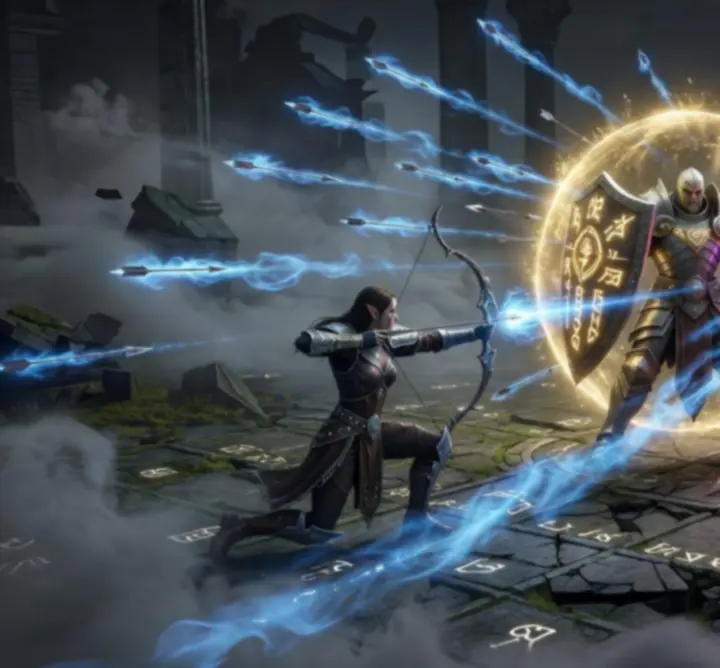
Tactical fantasy teamfight showing heroes executing a synchronized crowd control and damage combo in an esports arena
Synchronized ultimates and crowd control chains turn modest drafts into unstoppable lineups when executed cleanly.

Dynamic Synergy Counterplay

Learn to dismantle popular synergy strategies in ranked and tournaments.

Every powerful synergy has structural weaknesses. High‑level competitive gameplay is less about copying the strongest team comps and more about understanding how to de‑sync the enemy’s lineup.

Counterplay Framework

  • Spot the trigger: Identify which ability starts their combo (for example, one key engage or crowd‑control ultimate).
  • Draft disruption: Grab disengage, silence, displacement, or untargetability tools that specifically break that trigger.
  • Shift win conditions: Avoid 5v5s if they have a better front‑to‑back; play side lanes and picks instead.
  • Time windows: Fight when their critical ultimates are down or when item spikes favor your carries.

On the Meta Strategies page we tag every recommended lineup with its main counters so you can adapt instantly in champion select.

Scouting Synergy in Champ Select

Before bans finish, ask:

  1. What is their likely synergy core? (Engage + AoE, pick, split push?)
  2. Which 2 champions on their side must connect for the comp to work?
  3. Which 2 champions on our side can deny that connection?

Use this mental checklist in every draft. Over a full ranked season in Hungary, this alone can add a full tier to your rank.

Synergy Charts & Quick References

Visual maps of optimal hero pairings, synergy triggers, and role links for faster drafting.

How to Read the Synergy Dashboard

Our synergy dashboard condenses thousands of games into actionable patterns:

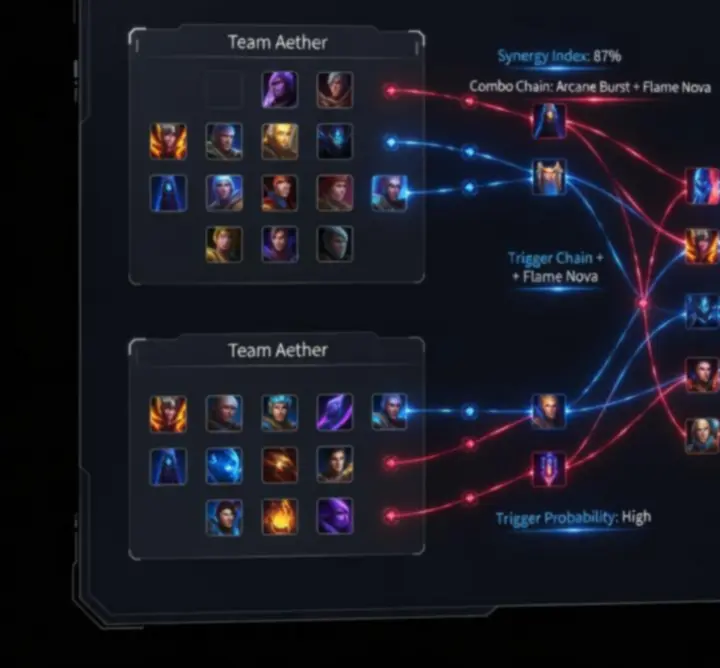
  • Color‑coded links show the strength of pairings (strong engage chains, peel loops, or poke setups).
  • Role icons highlight tank, support, damage, and flex picks so you keep your composition balanced.
  • Trigger markers show which cooldowns your team should track in comms during fights.

You can reference the dashboard between games or during queue to quickly build a RPG strategy lineup that fits the current patch.

Glowing fantasy synergy dashboard UI mapping hero pairings and combo triggers
Use the synergy dashboard before ranked sessions to lock in optimal hero pairings in under a minute.

Building Around Key Synergy Heroes

Identify champions that unlock entire synergy trees for your team.

Primary Engage Anchors

Champions whose initiations define your lineup’s rhythm. In League of Legends and Wild Rift, these often include hard‑CC tanks or brawlers with reliable gap‑closers.

  • Draft them first if your team prefers clear go‑buttons.
  • Pair with follow‑up AoE mages and front‑to‑back damage.
  • Protect them with peel supports if they are your only engage.

Enabling Supports

These heroes amplify allies through shields, heals, buffs, or utility. In a team lineup guide, they are the glue that stabilizes aggressive drafts.

  • Lock them in when your carries are mechanically confident.
  • Prioritize vision control to let your synergy cores execute safely.
  • Coordinate itemization (for example, redemption, locket) with your frontline.

Scaling Hypercarries

High‑damage, late‑game carries that demand strong protection. They transform small synergy wins into decisive objectives.

  • Draft when your team trusts its macro and discipline.
  • Ensure at least two forms of peel and reliable frontline.
  • Play around item spikes and avoid low‑percentage early skirmishes.

For champion‑specific examples and patch‑based rankings, head over to Game Overview and Meta Strategies where we track the current synergy kings of Summoner’s Rift and Wild Rift.

Case Study: Winning Lineups Breakdown

Real synergy examples inspired by top Hungarian and regional squads.

Hungarian Front‑to‑Back Blueprint

In recent community tournaments hosted for the HU scene, the most consistent performers favored simple, robust front‑to‑back comps that scale into dragon and Baron fights.

Structure

  • Top: Durable engage champion to start fights and absorb cooldowns.
  • Jungle: Frontline or secondary engage with early objective control.
  • Mid: Control mage for wave management and AoE damage.
  • Bot: Scaling marksman as primary sustained DPS.
  • Support: Enchanter or peel tank for backline protection.

Why It Works in HU Lobbies

  • High clarity: Every player knows their task—frontline, damage, or enable.
  • Low volatility: You can absorb early mistakes and still win 5v5s.
  • Macro friendly: Easy to play around drakes, Rift Herald, and Baron.
  • Great for mixed stacks: Works even when your team includes both solo‑queue grinders and casual friends.

Learn how to adapt this blueprint in solo‑queue on our Lineups and News pages, where we track patch shifts that affect frontline durability and scaling carries.

Synergy Pitfalls & Mistakes to Avoid

Common errors that quietly sabotage even strong drafts.

  • Over‑stacking one damage type: Full physical or full magic comps are easy to itemize against.
  • Single point of failure: If one hero must carry every fight, a single crowd‑control spell can end the game.
  • Conflicting win conditions: Split‑push top with 5v5‑only mid/bot rarely syncs in solo‑queue.
  • No disengage tools: Pure engage lineups crumble when they can’t reset after failed fights.
  • Ignoring comfort picks: A perfect theory comp played poorly loses to a solid, familiar lineup.

Continuous Optimization Mindset

Turn every game into a data point:

  1. After each match, rate your comp from 1–5 for engage, peel, damage, and objective control.
  2. Track which categories consistently feel weak.
  3. Adjust your future picks to plug those holes instead of blaming teammates.

If you love structured improvement, our Interactive Synergy Planner is built specifically for this style of RPG strategy refinement.

Interactive Synergy Planner

Downloadable tools to build, test, and refine your own hero lineups.

What the Planner Includes

  • Role grid: Slots for top, jungle, mid, bot, and support with notes for synergy roles.
  • Affinity tracker: Mark elemental themes and faction‑style groupings.
  • Win‑condition checklist: Identify if you are playing for picks, teamfights, or split push.
  • Counter‑tools log: Plan which enemy synergies your draft is targeting or dodging.
  • Review sheet: Rate performance after each game to refine future lineups.

Use the planner before clash events, Hungarian community tournaments, or ranked grind sessions to turn raw ideas into battle‑tested multiplayer tactics.

Get the Synergy Planner

Grab the latest version of the Lineup Roar synergy worksheet as a printable PDF and a digital spreadsheet template.

  • 1. Open the section (coming soon) for direct downloads.
  • 2. Until then, request access through our Contact Us page.
  • 3. Share your builds in the Community hub to get feedback from other Hungary‑based players.