Meta playbook · RAID: Shadow Legends · Hungary

Meta Strategies for Roaring Lineups

Optimize every battle in RAID: Shadow Legends with Hungary-focused meta reads, hero synergy frameworks, and tournament-ready multiplayer tactics tailored for Lineup Roar players.

Fantasy strategy game RPG strategy · Multiplayer tactics Region: Hungary (EU) Game: RAID: Shadow Legends

Mastering Meta Strategies

Track the live fantasy strategy game meta for RAID: Shadow Legends and convert raw stats into ruthless team lineup decisions.

Meta snapshot · Hungary

Dominant Team Comps & Win Conditions

Across Hungary's competitive RAID: Shadow Legends scene, the meta favors resilient speed-tuned control cores backed by explosive single-target burst. Typical tournament rosters revolve around a turn-order locked speed lead, layered crowd control, and cleanse or block debuffs to handle prolonged RPG strategy duels.

  • Speed + Control Shells: Openers that guarantee first turn into AoE crowd control while preserving damage dealers for follow-up turns.
  • Hybrid Sustain Cores: Healers and protectors anchoring glass-cannon heroes so lineups can survive extended multiplayer tactics.
  • Anti-meta Reaction Groups: Reactive passives and cleansing support to punish predictable debuff-heavy squads.

Use this as a live checklist when scouting high-ranked Hungarian arena players: if your lineup fails one of these categories, you're likely dropping games you could have converted.


Synergy systems

Synergy Systems Explained

Hero synergy in RAID: Shadow Legends is built on stacking complementary auras, passives, and debuff packages. Lineup Roar treats every hero as a role node in a tactical network: speed engine, control anchor, damage core, sustain pillar, and flex utility.

  • Turn-cycle synergy: Speed boosts and turn meter control align so your team loops faster than your opponent.
  • Damage amplification synergy: Debuffs like Decrease DEF, Weaken, and Block Buffs enable your damage dealers to one-shot critical targets.
  • Protection synergy: Shields, ally protection, and damage mitigation interact to create hard-to-break fantasy strategy game shells.

Before locking a lineup, validate that every hero amplifies at least one other hero. If any slot is “selfish-only,” your roster is under-synergized.

Counterplay & adaptation

Counterplay & Adaptive Lineups

Counterplay scene showing two fantasy teams clashing in a tactical RAID: Shadow Legends arena

Hard-counter play is what separates casual rosters from Lineup Roar squads. Instead of forcing one “perfect” lineup, maintain a compact pool of heroes that let you rotate between control-heavy, sustain-oriented, and burst-focused archetypes.

  • Identify the primary threat axis of an enemy team: speed, crowd control, or damage over time.
  • Swap in heroes whose passives naturally punish that axis, reducing the need for perfect manual play.
  • Reposition fragile carries behind protection layers so enemy AI or players cannot snipe them early.

In Hungarian high-tier brackets, winning drafts often hinge on a single adaptive flex slot. Treat that slot as a weapon, not a filler.

Early Game vs. Late Game Tactics

Shift your strategy profile as your account matures, from resource-starved early climbs to optimized late-game competitive gameplay.

Phase I · Foundation

Early Game: Stabilize & Accelerate

Early in RAID: Shadow Legends, Hungary players should treat every resource as a leverage tool, not a luxury. Your objective: build a compact core that clears PvE content fast enough to unlock key progression systems while staying relevant in low-to-mid arena brackets.

  • Invest heavily in one primary damage dealer with broad affinity coverage and reliable AoE damage.
  • Secure a speed aura and turn meter booster to control the pace of multiplayer tactics from the first turn.
  • Favor heroes who double-dip: campaign clear plus dungeon, or arena plus Clan Boss.
  • Use simple, tanky team lineup guides that forgive misplays rather than fragile one-shot comps.

If you frequently lose before your second rotation of abilities, your early-game lineups are under-protected or under-tuned on speed.

Phase II · Optimization

Late Game: Precision & Meta Shaping

Late-game RAID: Shadow Legends for Hungary's competitive scene moves from “can I clear?” to “how efficiently and how reliably can I win?” At this stage, you refine your hero synergy micro and exploit power spikes to challenge established arena and tournament metas.

  • Run specialized squads for each content lane: speed nukers, stall comps, go-second traps, and high-resistance control.
  • Optimize turn-order scripts so that every action in a round is deliberate, not RNG-dependent.
  • Leverage off-meta heroes that Hungary opponents underestimate, surprising them with unexpected RPG strategy lines.
  • Continuously analyze loss replays and tweak masteries, gear sets, and team positioning.

Late-game mastery is less about “stronger heroes” and more about squeezing extra value from every interaction your squad can trigger.

Role Assignments & Positioning Tips

Put the right heroes in the right positions to let your synergy engine roar at full power.

Lineup architecture

Five-Node Role Framework

Every Lineup Roar squad in RAID: Shadow Legends can be mapped to five tactical nodes. Assigning heroes to these nodes clarifies your strategy and prevents role overlap that wastes potential.

Speed Engine
Sets turn tempo with auras, speed buffs, or turn meter boosts. Often leads the team.
Control Anchor
Applies stuns, freezes, or crowd control to disable enemy openers and carries.
Damage Core
Executes key targets once defenses are stripped, often using nukes or multi-hits.
Sustain Pillar
Heals, shields, or mitigates damage so your comp survives long exchanges.
Flex Utility
Tech slot that swaps for anti-meta pieces, cleansers, or niche passives.

Before each match, state your five nodes out loud or in notes. If two heroes fight for the same node, you're over-invested and under-flexible.

Positioning

Smart Positioning Principles

While arena positioning in RAID: Shadow Legends is less grid-based than some fantasy strategy games, subtle choices still influence AI targeting, protection arcs, and buff distribution.

  • Protect your speed engine: Keep your fastest hero out of common AI focus slots or pair them with ally protection.
  • Cluster synergy chains: Heroes that share buff/debuff interactions should sit adjacent when abilities target “allies nearby.”
  • Isolate cleanse targets: If a single hero needs frequent cleansing, avoid stacking them with others who could compete for support cooldowns.
  • Mirror successful Hungarian layouts: Watch top local players and copy their lineup ordering as a proven baseline.

Squad drafting

Drafting the Ultimate Squad

Drafting in RAID: Shadow Legends is about sequencing your choices to reveal as little of your final RPG strategy as possible while forcing opponents into bad hero synergy trades.

  1. Lock the speed engine first: Secure initiative so every later pick benefits from turn advantage.
  2. Hide your win condition: Delay revealing your main damage core until you’ve seen enemy protection and control picks.
  3. Draft double answers: Ensure at least two heroes can answer key threats like unkillable buffs or heavy crowd control.
  4. Reserve the flex slot: Leave one hero slot uncommitted to respond to your opponent's final reveal.
  5. Sync with strategy UI tools: Use Lineup Roar dashboards and notes so your picks follow a structured plan instead of instinct alone.

Hungary's Top Strategic Approaches

Break down the preferred strategies that define Hungary's RAID: Shadow Legends competitive ladder.

Hungarian players lean toward controlled aggression in multiplayer tactics: they prioritize reliable opening control, then pivot quickly into burst damage before sustain comps can stabilize. This style rewards tight hero synergy and confident matchup reading.

  • Tempo lock teams: High-speed leaders plus layered turn meter control to deny enemy actions completely.
  • Go-second traps: Durable teams baiting first-turn nukes, then counterattacking with revive and counterattack buffs.
  • Resistance walls: High-resistance supports that shrug off control and slowly drain opponents with debuffs.
  • Hybrid bruiser squads: Mid-speed lineups packing both damage and sustain so they can pivot between offense and defense.

When queuing into Hungarian peak-time ladders, prepare at least one lineup for each of these archetypes. Lineup Roar recommends pre-tagging counters in your team lineup guide for instant swapping.

Hungarian esports-style RAID: Shadow Legends team reviewing fantasy battle strategies on a glowing tactical screen

Multiplayer tactics

Team Coordination & Communication

Even the strongest fantasy strategy game lineup fails without synchronized execution. Lineup Roar emphasizes clarity, brevity, and repeatable call patterns for Hungary-based RAID: Shadow Legends teams.

  • Define a single shot-caller for each match who owns turn-order calls and target focus.
  • Use short, consistent commands: “burn shield,” “reset,” “sleep left,” “nuke mid.”
  • Agree on fail-safe plans in advance: what happens if the opener misses a key debuff or control effect.
  • After matches, run 60-second reviews: one success, one mistake, one adjustment for the next game.

Resources & power spikes

Resource Management & Power Spikes

Competitive gameplay in RAID: Shadow Legends revolves around recognizing when your lineup is temporarily stronger than your opponent and capitalizing before the window closes.

  • Ability cycles: Track when key cooldowns like team revive, cleanse, or AoE nukes align for your squad.
  • Buff/debuff uptime: Engage aggressively when your damage amplifiers are active and enemy defenses are stripped.
  • Gear thresholds: Re-evaluate lineups once major gear upgrades or artifact sets push you into new speed or damage brackets.
  • Resource allocation: In Hungary's competitive environment, avoid spreading books and masteries thin; fully optimize a few heroes that matter most to your meta strategy.

When in doubt, delay major investments until your strategic plan is clear. Lineup Roar's guides help you decide which heroes justify full resource commits.

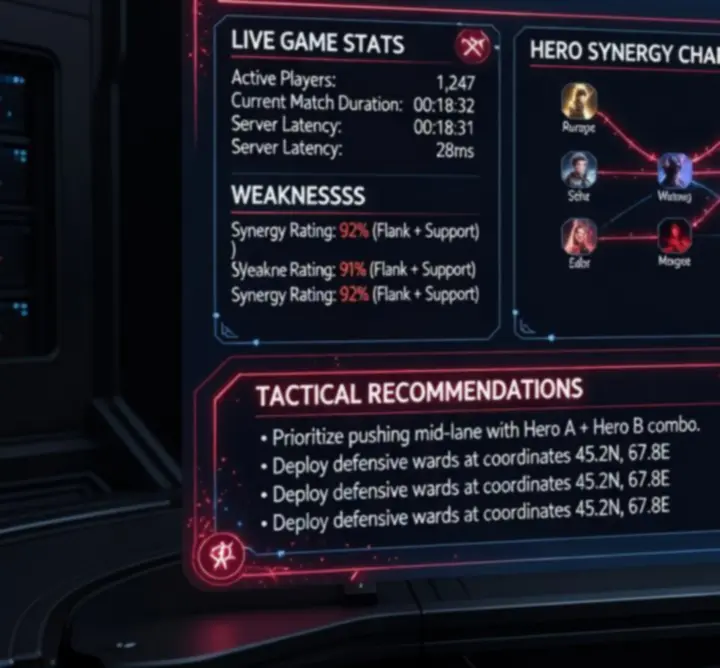
Dark fantasy tactical strategy dashboard UI showing hero lineups, stats, and synergy links

Adaptive Strategy Dashboards

Turn complex RAID: Shadow Legends data into decisions you can execute in seconds.

Lineup Roar promotes using tactical dashboards as your second monitor brain. Rather than trusting memory, you rely on structured visualizations of hero synergy, lineup counters, and matchup tags.

  • Tag lineups by archetype (speed, stall, trap, bruiser) and target (arena, Clan Boss, dungeons).
  • Color-code heroes by role node so you instantly see gaps in new drafts.
  • Log Hungarian ladder opponents with screenshots and notes; update counters as the meta evolves.
  • Use dashboards between matches to decide whether to swap heroes, switch squads, or change playstyle.

Lineup Roar Signature Builds

Hero combinations and tactical synergy packages that define the “Roar” philosophy in RAID: Shadow Legends.

Signature build · Tempo assault

Roar Tempo Assault

A hyper-optimized speed control lineup tuned for Hungary's upper arena brackets. It aims to take every meaningful turn while locking enemies in permanent debuff cycles.

  • Speed lead with teamwide aura and turn meter boost.
  • Primary crowd controller with AoE stun/freeze and high accuracy.
  • Defense shredder stacking Decrease DEF and Weaken.
  • AoE nuker bursting down exposed targets.
  • Minimal sustain, relying on winning before counterpressure builds.

Ideal for players comfortable with manual piloting and precise speed tuning. One mis-ordered action can flip the match.

Signature build · Fortress

Roar Iron Fortress

This build embodies the unbreakable lineup philosophy. It excels in tournaments and long-format matches where opponents struggle to push through layered defenses.

  • High-HP protector with ally protection and shields.
  • Cleanser or block debuffs specialist to counter control-heavy metas.
  • Continuous heal or lifesteal engine to outlast poke damage.
  • Debuff spreader that slowly stacks poisons, burns, or max HP damage.
  • Fallback revive to reset failed openers.

Perfect for go-second strategies on the Hungarian ladder where many players default to fragile nuker squads.

Signature build · Hybrid control

Roar Hybrid Dominance

The flagship Lineup Roar style: balanced but lethal. It mixes hardened sustain with explosive single-target nukes, enabling flexible responses to a wide range of meta lineups.

  • Mid-speed opener that can pivot between buffing allies and disrupting enemies.
  • One hard-hitting single-target assassin for priority threats.
  • Tanky bruiser that doubles as crowd control and secondary damage.
  • Support with both cleanse and revive for reliability.
  • Utility flex hero tailored to local Hungarian trends (anti-buff, strip, or passive counters).

If you want one all-purpose lineup to practice deeply, start with a Roar Hybrid Dominance shell, then tweak based on your hero pool.

Ready to turn theory into trophies? Combine these strategies with our in-depth lineup and synergy breakdowns.